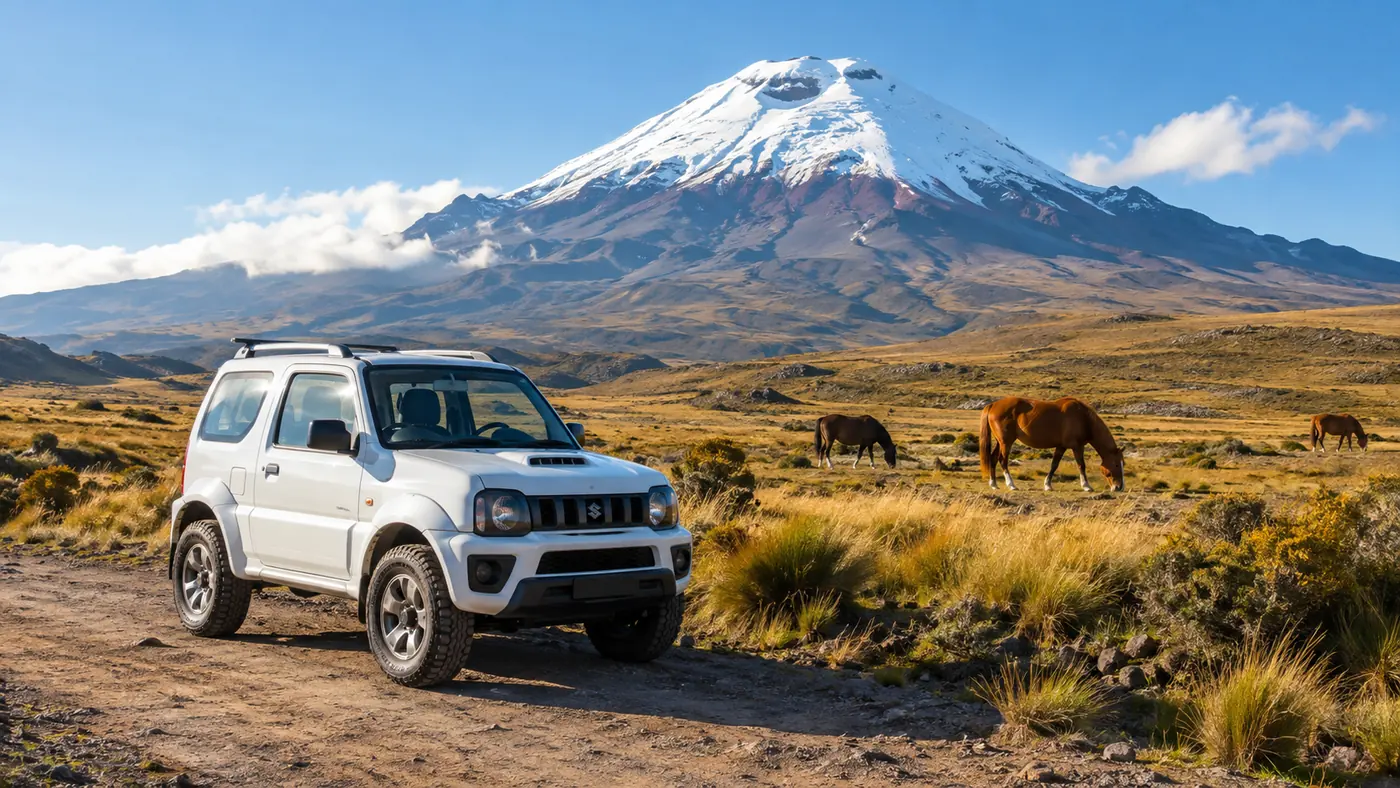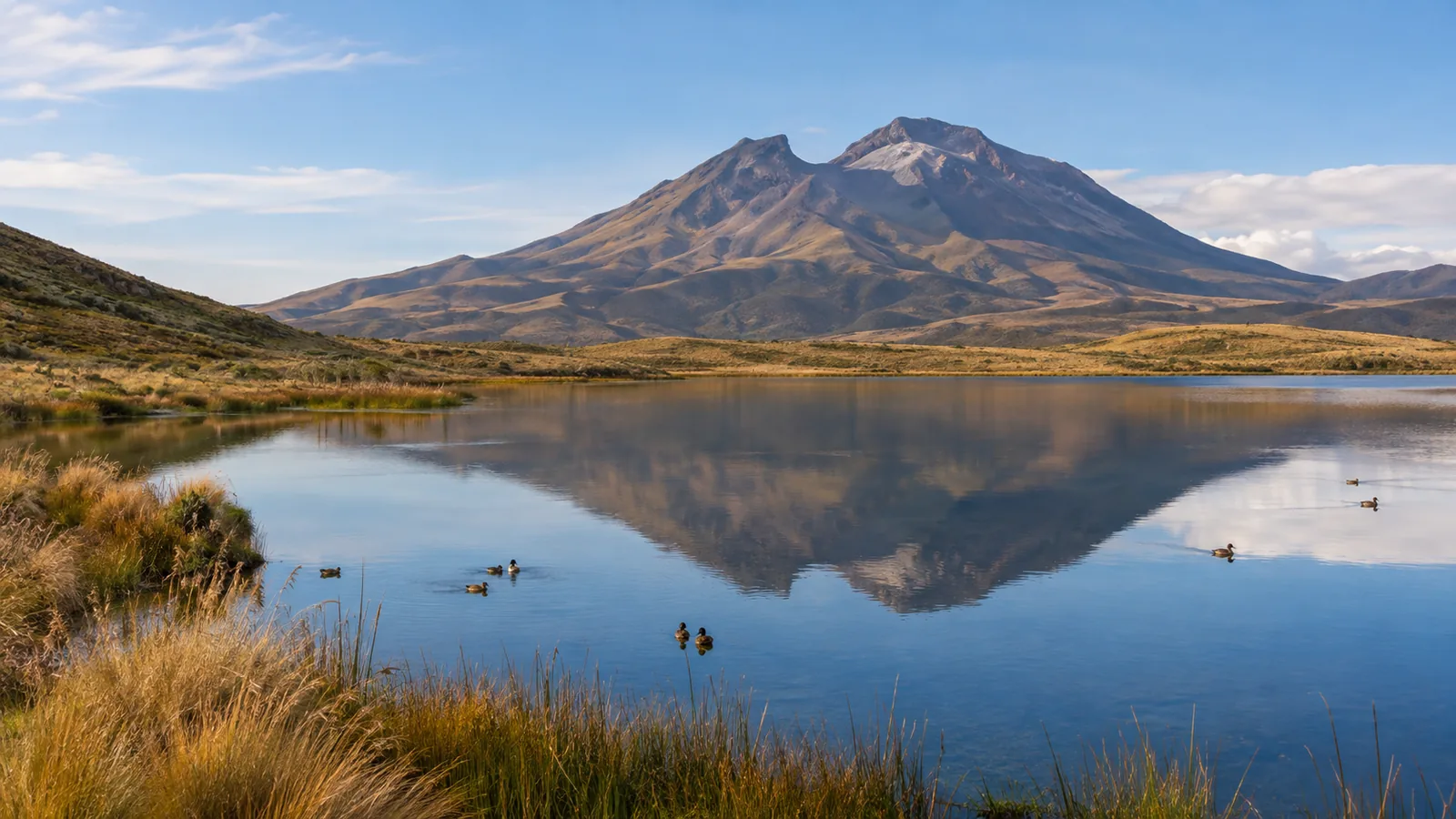
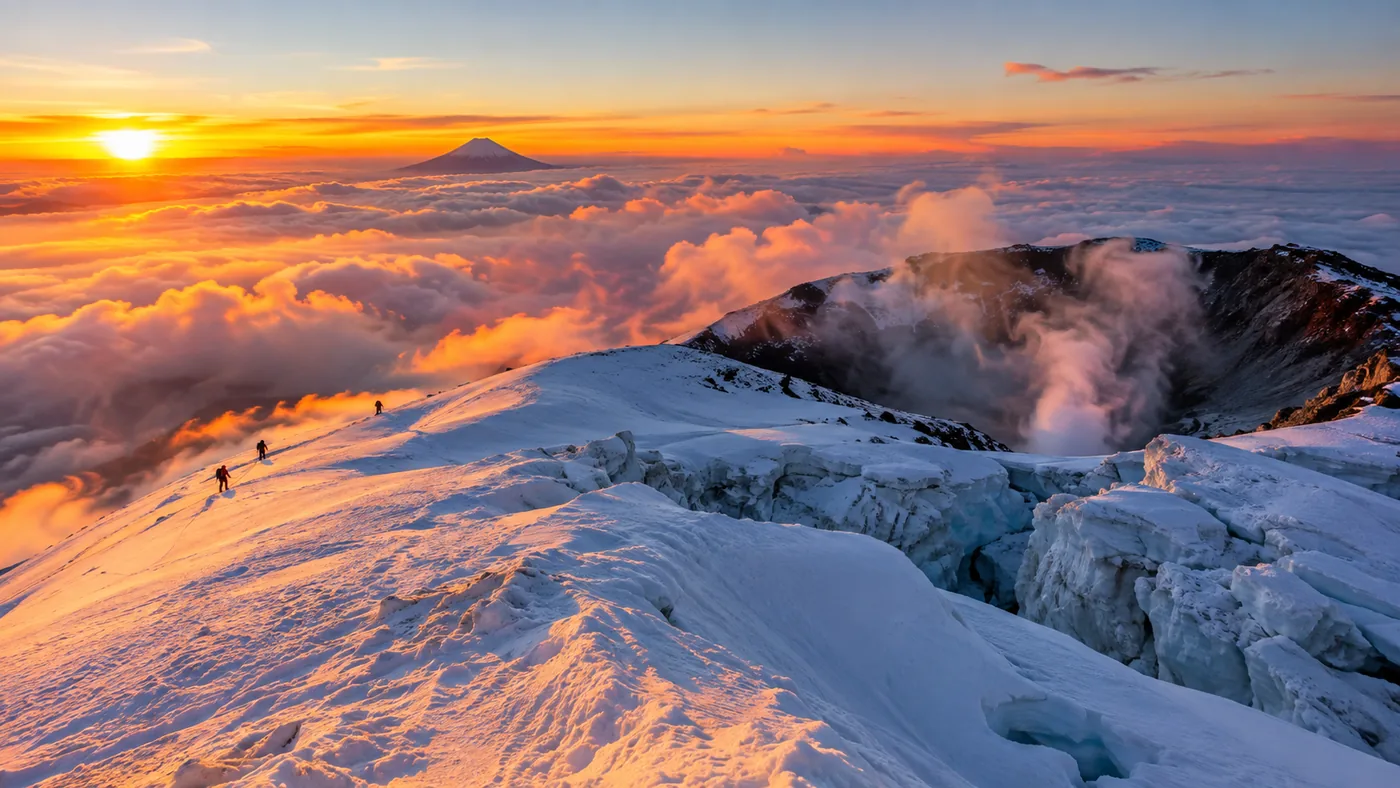
Booking choice: The 2-day summit climb, New listing. Check dates Compare the options below
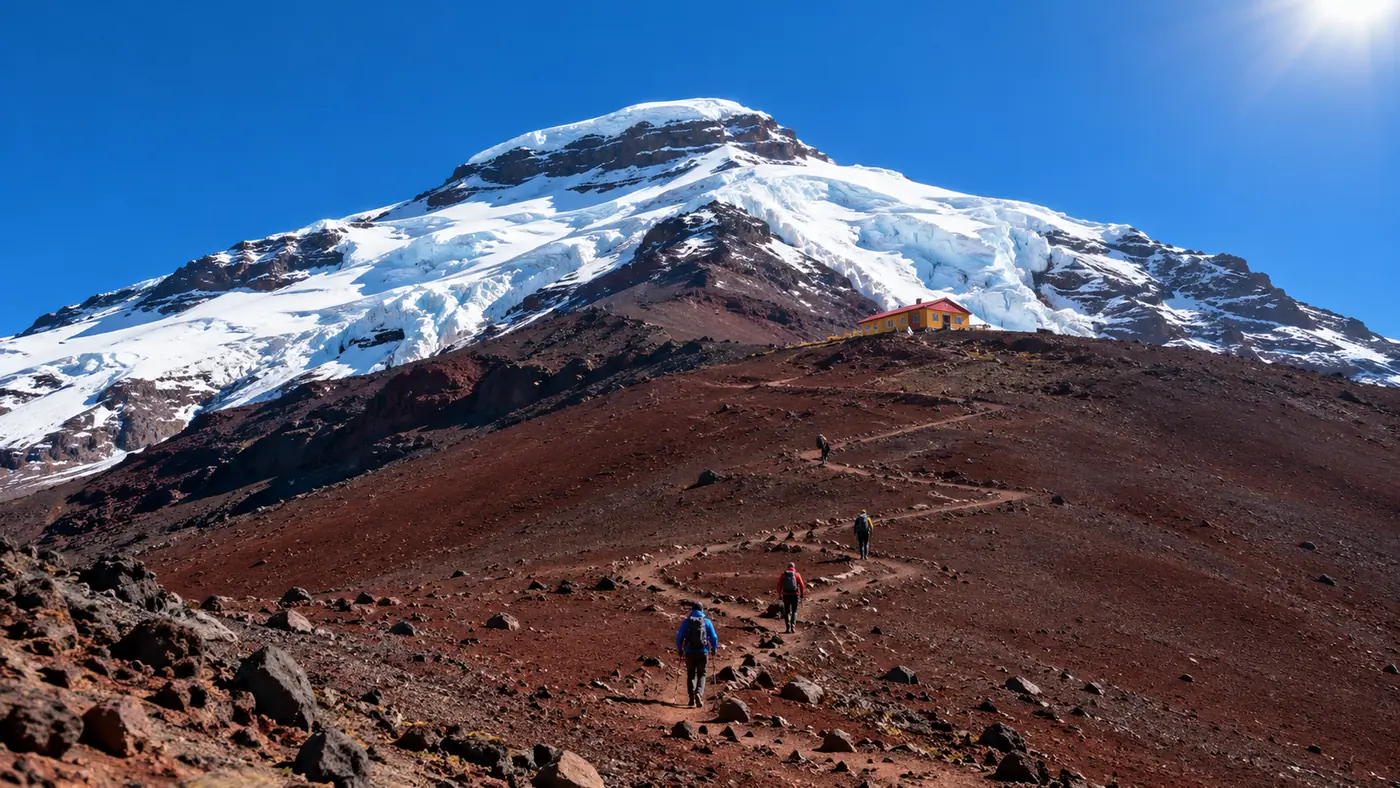
Cotopaxi is one of the highest active volcanoes in the world, and its almost perfect cone is the mountain many people come to Ecuador to climb. The route from the refuge is not a rock climb, but it is a real glacier ascent at very high altitude, done at night, on a rope, behind a certified guide.
This guide explains the rules that apply since the summit reopened, how the two days work, how to acclimatise, what gear you need and how to think about the risks. If you only want to reach the refuge in a day, read the Cotopaxi refuge hike guide instead; the hike and the climb are very different trips.
The quick answer
Summit: 5,897 m; some surveys give slightly higher. Trip: two days from Quito, with a night at the José Ribas refuge (4,864 m). Summit push: start around midnight, 6 to 8 hours up, 3 to 4 hours down. Terrain: glacier with crevasses and slopes of about 40 to 50 degrees near the top; crampons, ice axe, harness, rope and helmet. Rules: a certified ASEGUIM or IFMGA guide, a licensed operator with a park quota, a refuge booking plus acclimatisation lodging, SIB registration, a signed waiver, the IG-EPN briefing, full mountaineering kit and a gas mask with filters. Ratio: two climbers per guide is widely applied. Acclimatisation: several days first, in Quito and on smaller peaks such as Rucu Pichincha, Iliniza Norte or Rumiñahui. Best months: June to September and December to January. Status: summit climbs run with park permits; rules can change at short notice. Budget: much bigger than a day trip. Cancellation: full refund if you cancel up to 24 hours ahead on every tour listed here.
Is a Cotopaxi summit day trip possible?
No. Every day tour from Quito stops at the refuge at 4,864 m or, at most, near the glacier edge at about 5,000 m. The summit is about 1,000 m higher and needs a night at the refuge and a start around midnight.
The timing is set by the ice. Climbers cross the glacier at night, when the snow is frozen hard and safer underfoot, and aim to be on top around sunrise, before the sun softens the slopes and cloud builds in the late morning. That only works if you are already at the refuge in the evening. Tour listings that promise a Cotopaxi hike mean the refuge trail, not the summit.
The highest a day trip goes is the guided hike to 5,000 m with gear, a new listing with a private certified guide that continues past the refuge towards the 5,000 m mark when the park allows it. It stays a hike, without crampons or ropes. Many climbers use a day like this, or the Cotopaxi day trip with the refuge hike, as an acclimatisation outing a few days before their summit attempt.
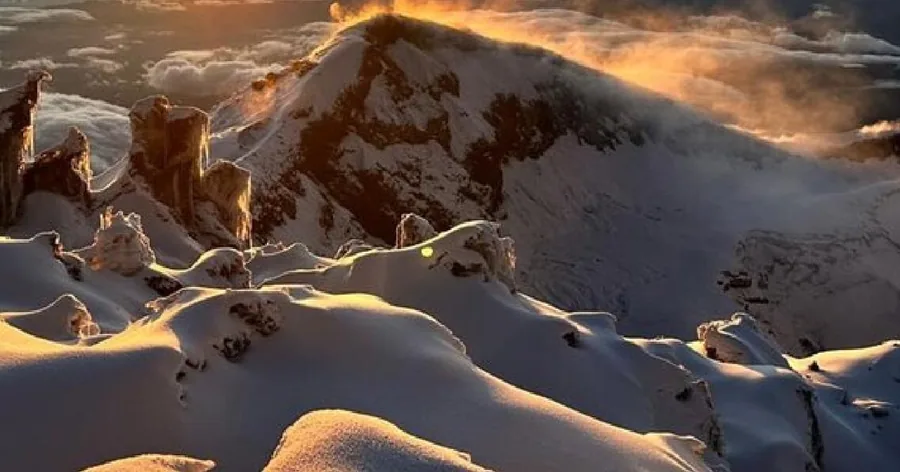
What do you need to climb Cotopaxi in 2026?
A certified guide through a licensed operator, a park quota, a refuge booking, registration papers, an IG-EPN briefing and full mountaineering kit. These are the conditions the park set when the summit reopened in February 2024.
- A certified guide: an ASEGUIM or IFMGA mountain guide, with the credential shown at the gate.
- A licensed operator and a quota: the operator must hold a park operating permit and request a climbing quota in advance.
- Lodging bookings: a confirmed night at the José Ribas refuge, plus acclimatisation lodging such as Tambopaxi or La Rinconada.
- Registration: the SIB registration sheet for the protected area.
- A signed waiver: a liability waiver with a copy of your ID.
- The IG-EPN briefing: attendance at the safety briefing on the volcano's current state.
- Kit: good mountaineering equipment and a gas mask with filters.
- An entry wristband: issued at the control gate, Control Caspi or Control Norte.
In practice the operator arranges almost all of this. You bring your passport, sign the waiver, attend the briefing and turn up acclimatised. Gear lists differ by operator, so check what is lent and what you bring yourself.
Two days with the paperwork handled: a certified ASEGUIM guide for every two climbers, the refuge night, park fees, technical gear and adventure insurance.
Check dates for the 2-day summit climbWho can guide you to the summit of Cotopaxi?
Only a certified mountain guide: ASEGUIM, the Ecuadorian association of mountain guides, or IFMGA, the international federation. They must work through an operator with a park permit. You cannot climb the glacier on your own.
A ratio of two climbers per guide is widely applied on Cotopaxi, and on a private climb it is one to one. A small rope team means the guide can watch your pace and breathing and turn the team round early if needed. The guide's call on turning back is final, and good guides make it without hesitation.
The 2-day Cotopaxi summit climb with gear is a new listing with no reviews yet, so you cannot judge it by ratings. What it lists is complete: private transport from Quito, a certified ASEGUIM guide at two climbers per guide, the night at the José Ribas refuge, meals on the climb, park fees, boots, crampons, harness, helmet and ice axe, and adventure insurance with rescue logistics. Acclimatisation days beforehand are strongly recommended but not included. The private 2-day Cotopaxi summit climb, also new, adds pickup in Quito, Latacunga or Ambato and a guide only for you or your group.
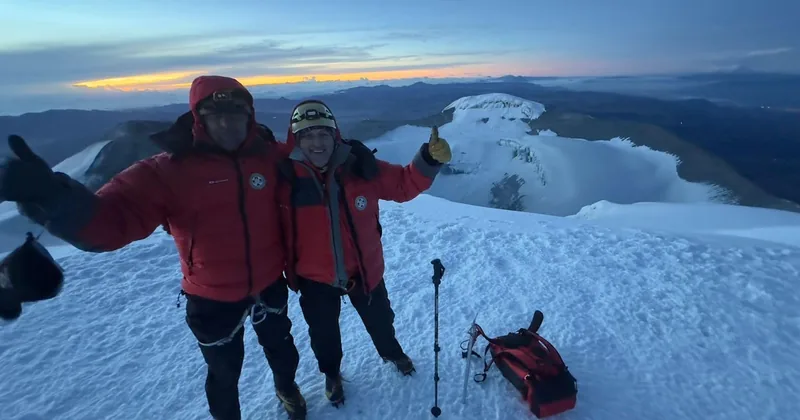
The real summit, in two days from Quito: a certified ASEGUIM guide for every two climbers, a night at the José Ribas refuge, meals on the climb, park fees, boots, crampons, harness, helmet and ice axe, and adventure insurance. A new listing, no reviews yet.
Explore the 2-day summit climbHow long does it take to climb Cotopaxi?
Two days. The summit push itself takes 6 to 8 hours up from the refuge and 3 to 4 hours down, after a wake-up around 23:30.
Day one is short on distance but important. The drive and the hike to the refuge take only a few hours, and the afternoon goes on sorting gear, a briefing on the route and the safety plan, and an early dinner. Sleep at 4,864 m is usually light, and that is normal. Day two is long: most of the night on the glacier by headlamp, the summit at first light if all goes well, then the descent in daylight, the hike back to the car park and the drive to Quito.
| Day | Where | What happens |
|---|---|---|
| Days before | Quito and smaller peaks | Acclimatisation: nights at about 2,850 m in Quito and hikes on lower mountains |
| Day 1, morning | Quito to Cotopaxi National Park | Transfer along the Avenue of the Volcanoes, registration at the gate and the drive to the car park (about 4,600 m in the listing) |
| Day 1, afternoon | Car park to the José Ribas refuge, 4,864 m | 40 to 50 minutes on foot, gear check and a briefing on route conditions and safety |
| Day 1, evening | José Ribas refuge | Dinner about 17:00, then early sleep |
| Day 2, about 23:30 | José Ribas refuge | Wake-up, a light snack, final gear check, crampons and rope on |
| Day 2, night to dawn | Glacier to the summit, 5,897 m | 6 to 8 hours of steady roped climbing on snow and ice by headlamp |
| Day 2, morning | Summit to the refuge and car park | 3 to 4 hours down, then the hike to the car park and the drive back to Quito |
Can beginners climb Cotopaxi?
Fit beginners do reach the summit with a certified guide and good acclimatisation, and the listings here ask for no previous technical experience. Many first-timers still turn back, mostly because of altitude or weather.
The technique you need is simple and the guide teaches it: walking in crampons, using the ice axe and moving on a rope. What decides the day is your body. You need the stamina for 9 to 12 hours of effort after very little sleep, and you need to be well acclimatised, which you can only partly control. Regular hiking, running or cycling in the months before helps a lot, and so do long days with height gain.
Be honest with yourself and your operator about your experience. If you have never been above 4,000 m, start lower: a refuge day such as the Cotopaxi day trip with the refuge hike shows you how you feel at 4,864 m before you commit to the summit. Read the Cotopaxi altitude guide for the symptoms to watch for. Turning back is not a failure. Many strong climbers have stood below the summit and come back another year.
How many days should you acclimatise before climbing Cotopaxi?
Several. Operators recommend a couple of nights in Quito at about 2,850 m, then day hikes on smaller peaks such as Rucu Pichincha, Iliniza Norte or Rumiñahui. Some programmes run 8 to 12 days in total.
Good acclimatisation is the biggest factor you control. A common pattern is two or three nights in Quito, a hike up Rucu Pichincha from the top of the TelefériQo cable car, then a night or two at a lodge near the park before going higher, for example on Rumiñahui or Iliniza Norte. The 2024 climbing rules name Tambopaxi and La Rinconada as acclimatisation lodging for climbers. The details of how altitude affects you are in the Cotopaxi altitude guide.
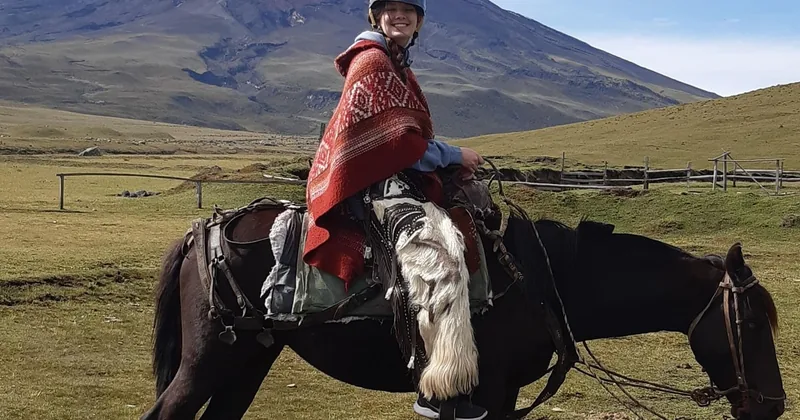
A refuge day trip is a useful step in the plan: you reach 4,864 m and sleep low again in Quito. If you would rather spend an acclimatisation day more gently, the private horseback ride and refuge hike (5.0 from 23 reviews) spends about 1.5 hours on horseback in the park before the hike. Only go higher when you feel well. A headache that will not go away is a reason to wait, not to push on.
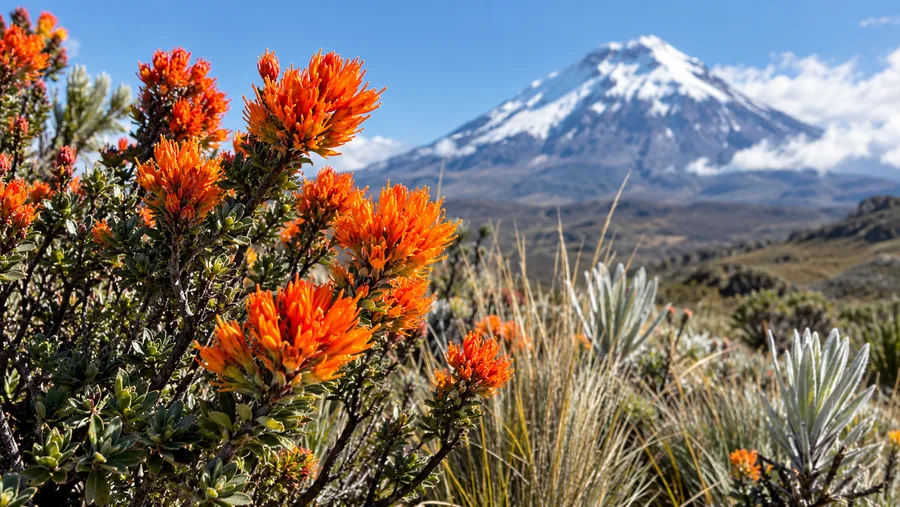
A good acclimatisation day: up to the José Ribas refuge at 4,864 m with a bilingual guide, then back down to sleep in Quito.
Check dates for the day trip with the refuge hikeIs the Cotopaxi summit climb dangerous?
It is serious mountaineering: a glacier with crevasses, slopes of about 40 to 50 degrees near the top, cold, wind and the risk of avalanches. A certified guide, a rope team, full gear and good acclimatisation manage the risks, and the guide decides when to turn back.
On 16 March 2025, at dawn, an avalanche near the summit hit roped teams and several climbers were hurt. The park closed for a time and reviewed summit ascents before climbs resumed under permits. It is a reminder that the summit is a different world from the refuge trail, and that the briefings, the quotas and the guide rules exist for good reasons. Cotopaxi is also an active volcano, which is why climbers attend the IG-EPN briefing and carry a gas mask; the current status is explained in is Cotopaxi open.
Weather is the other big factor. The driest months are June to September, with strong wind in August and September, and a second window from December to January. February to May and October to November are wetter, with more snow and cloud on the mountain. Near the summit, temperatures can drop to about minus 10 to minus 20 °C with the wind, so warm layers, gloves and a good jacket are as important as the technical gear.
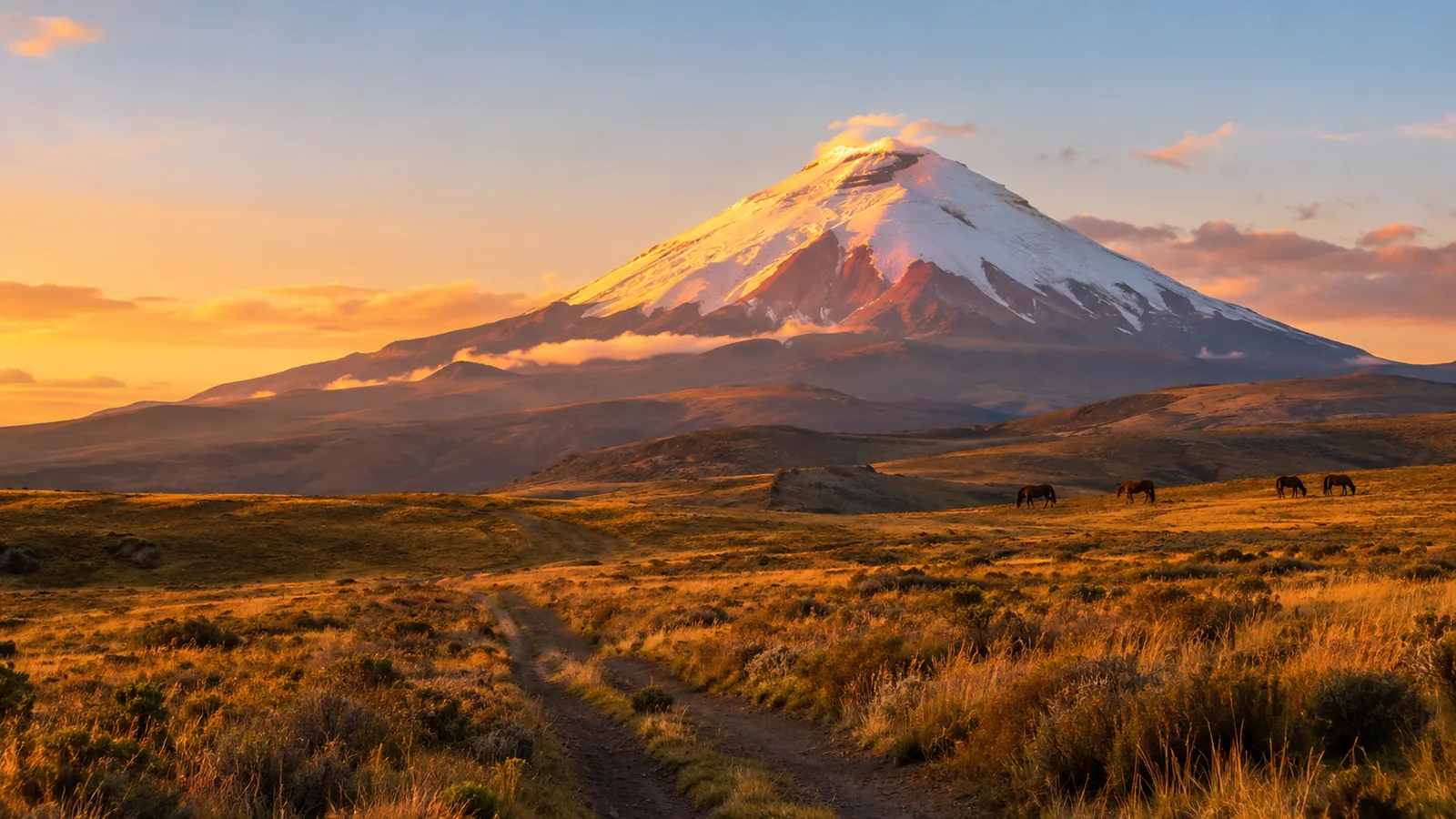
Who first climbed Cotopaxi?
Wilhelm Reiss, a German geologist, and Ángel María Escobar from Popayán in Colombia, on 28 November 1872.
Seventy years earlier, in 1802, Alexander von Humboldt, who gave the Avenue of the Volcanoes its name, explored the area and reached about 4,500 m on Cotopaxi. The José Ribas refuge, the base for today's climbs, was built in 1971. Since then the glacier has retreated and the route has changed with it. Summit access closed in October 2022 and reopened in stages from 21 February 2024.
Climbing in the footsteps of Reiss and Escobar is a big project, and a much bigger budget than a day trip. If your time in Ecuador is short, a refuge hike or a day in the páramo still gives you the glacier at close range. For a gentler day with the volcano always in view, see the tours on the homepage.
A private day before the big climb: about 1.5 hours on horseback with a chagra guide, then the refuge hike to 4,864 m.
Check dates for the private horseback ride and refuge hikeFrequently asked questions
How high is Cotopaxi?
5,897 m is the figure most sources use; some surveys give slightly higher. It is the second highest summit in Ecuador after Chimborazo.
What time do you start climbing Cotopaxi?
Usually around midnight from the José Ribas refuge, after a wake-up around 23:30, to reach the summit around sunrise.
Is gear included on the Cotopaxi summit climb?
On the summit climb listed here, boots, crampons, harness, helmet and ice axe are included. Personal clothing, a backpack and a headlamp are not.
Can I cancel a Cotopaxi summit climb?
Yes. Both summit climbs in this guide give a full refund if you cancel up to 24 hours ahead.
Ready to book
Choose your tour
Check your date and the live price on GetYourGuide; the refund terms are shown on each option.
2-Day Cotopaxi Summit Climb with Gear
The real summit: a refuge night and a roped glacier climb with a certified guide; new listing
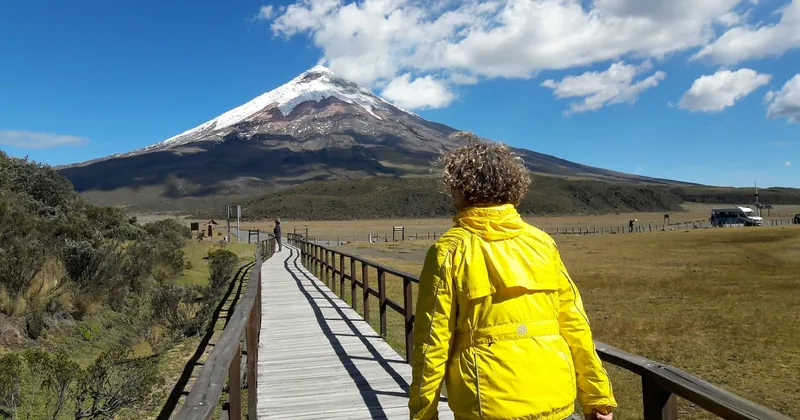
Cotopaxi Day Trip with the Refuge Hike
- Transport from Quito and back
- A bilingual guide, English and Spanish
- Park visitor centre and Limpiopungo lagoon
Horseback Ride and Refuge Hike, Private
- Private transport with hotel pickup
- A certified guide and a chagra horse guide
- About 1.5 hours on horseback, no experience needed